5 Common ID Fan Problems and Solutions
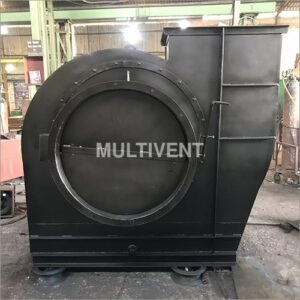
An ID Fan (Induced Draft Fan) is one of the most important parts of any boiler system because it controls the draft inside the furnace. Its job is to pull flue gases out of the boiler and maintain negative pressure so that combustion remains stable and smoke does not leak into the plant.
When the ID fan performs well, the boiler runs smoothly, fuel burns efficiently, and production remains stable. But when the fan starts developing problems, the effects are visible across the entire plant—higher fuel consumption, unstable combustion, excessive vibration, rising power costs, and unexpected shutdowns.
The important truth is that ID fan failures rarely happen suddenly. They begin with small warnings. The problem is not failure itself—the problem is ignoring the warning.
Excessive Vibration
Vibration is one of the clearest signs that something is wrong. Many plants continue running with vibration because production has not stopped yet, but vibration is never just movement—it is continuous mechanical stress.
It damages bearings, weakens shafts, affects alignment, and slowly destroys the foundation of the machine.
The most common cause is impeller imbalance. Dust and ash stick to the blades, especially in cement plants, rice mills, and biomass boilers. This uneven weight forces the fan to rotate under stress.
The solution is not temporary adjustment. The impeller must be cleaned, balanced, and inspected properly. Alignment and foundation stability must also be checked.
A vibrating fan is not a normal fan—it is a warning machine.
High Bearing Temperature
Bearings fail quietly before they fail completely. The first sign is usually temperature.
When bearing temperature rises, it means friction is increasing. This may happen because of poor lubrication, excess grease, wrong grease type, contamination, or shaft misalignment.
Many people think adding more grease solves the problem, but over-greasing often creates more heat than protection.
The real solution is lubrication discipline. Correct grease, correct quantity, and correct timing matter more than frequent greasing.
A bearing never fails suddenly. It asks for attention first.
Reduced Draft Pressure
The real purpose of the ID fan is draft control. If draft becomes weak, combustion becomes weak.
Poor draft causes incomplete fuel burning, smoke leakage, unstable flame, and higher fuel consumption. Many operators increase fan speed to solve it, but speed is not always the problem.
Often the real reason is duct leakage, ash blockage, damper failure, or impeller wear.
The solution is system inspection, not just RPM adjustment. The fan and ducting must be treated as one system.
Good draft comes from clear airflow, not just faster rotation.
Motor Overheating
When the motor overheats, people usually blame the motor first. In reality, the motor is often reacting to resistance somewhere else.
A blocked duct, damaged impeller, poor alignment, or bearing friction forces the motor to work harder. That extra load becomes heat and high power consumption.
Replacing the motor without solving the cause only repeats the problem.
The motor does not create the fault—it exposes it.
Unusual Noise
Machines speak before they stop, and they usually speak through sound.
Grinding, knocking, rubbing, or metallic noise means internal parts are under stress. It may be a loose impeller, worn bearing, shaft misalignment, or internal contact.
Ignoring sound is one of the most expensive maintenance mistakes.
Experienced operators trust machine sound because it often reveals problems before instruments do.
Noise is not disturbance—it is information.
Conclusion
Common ID fan problems are not dangerous because they exist—they are dangerous because they are ignored.
Vibration, heat, weak draft, high power consumption, and unusual sound are early warnings. The best plants do not wait for breakdown. They act when the machine first starts speaking.
In industry, prevention is always cheaper than repair.
And an ID fan does not need constant fixing—it needs timely attention.
