Maintain ID Fan Efficiently

ID Fan Maintenance Checklist: Practical Guide for Reliable Boiler Performance

In any boiler system, the ID Fan is one of the most important machines, yet it is often noticed only when a problem occurs. The full form of ID Fan is Induced Draft Fan, and its job is to pull flue gases out of the furnace and maintain negative pressure inside the combustion chamber. This negative pressure is necessary because it keeps combustion stable, prevents smoke leakage, and allows the boiler to run safely and efficiently.

When the ID fan performs properly, the boiler breathes correctly. Fuel burns completely, emissions stay under control, and production continues smoothly. But when the fan starts losing efficiency, the entire system begins to suffer. Draft becomes unstable, fuel consumption rises, vibration increases, and unexpected shutdowns start becoming common.

This is why ID fan maintenance should never be treated as a routine checklist only for the maintenance department. It is directly connected to plant performance, fuel cost, and operational reliability.

Understanding the Real Purpose of Maintenance

Many industries think maintenance means repairing something after it breaks. In reality, good maintenance means preventing that breakdown from happening at all.

An ID fan works continuously in harsh conditions. It handles hot gases, ash particles, dust, and constant rotational load. Because of this, wear does not happen suddenly—it happens gradually. Bearings start heating, impellers collect dust, shafts lose alignment, and motors begin drawing extra current.

These are not failures. These are warnings.

The purpose of maintenance is to notice these warnings early and act before production is affected. A bearing replaced during planned maintenance costs little. The same bearing failing during operation can stop the entire boiler and create a much bigger loss.

Preventive maintenance saves more money than emergency repair ever can.
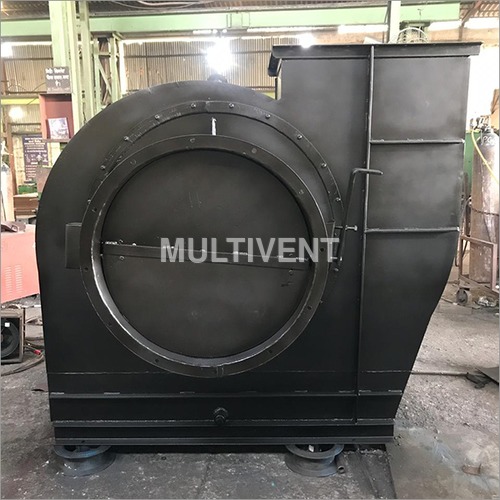
id fan induced draft fan

Sound and Vibration Tell the Truth First

Before instruments show a problem, the machine usually tells you through sound and vibration.

A healthy ID fan has a steady and smooth operating sound. When grinding, rubbing, metallic knocking, or sharp whistling starts, it usually means something inside is changing. It may be bearing wear, impeller imbalance, loose coupling, or internal contact.

Experienced operators often identify problems simply by listening. This is not guesswork—it comes from understanding machine behavior.

Vibration is even more important. Every rotating machine vibrates, but excessive vibration is never normal. It increases load on bearings, weakens the shaft, affects motor performance, and can even damage the foundation.

One common reason is dust sticking to the impeller blades. This creates imbalance and forces the fan to run unevenly. The machine may still work, but every hour of operation increases hidden damage.

Vibration should never be accepted as “normal.” It should always be investigated.

Bearing Health Depends on Discipline

Bearings are often the first parts to fail because they carry continuous load. Their condition decides how long the fan can run safely.

When bearing temperature rises, there is always a reason. It may be poor lubrication, wrong grease, contamination, misalignment, or simple wear. Many people respond by adding more grease, assuming more lubrication means better protection.

This is a common mistake.

Over-greasing is just as harmful as under-greasing. Too much grease creates heat, damages seals, and reduces bearing life. Lubrication should be controlled, not guessed.

Correct grease, correct quantity, and correct timing—this is what protects bearings.

A small lubrication mistake can become a major shutdown if ignored.

Motor Problems Often Start Elsewhere

When the motor begins overheating or drawing high current, many people immediately assume the motor is faulty. In many cases, the motor is only reacting to a problem somewhere else.

If the impeller is damaged, the duct is blocked, the damper is not opening properly, or the shaft is misaligned, the motor has to work harder. This increases power consumption and creates heat.

Replacing the motor without solving the real cause only repeats the same problem later.

The motor should always be checked together with the fan system, not separately. It reflects the health of the entire setup.

When power consumption rises suddenly, it usually means efficiency is falling somewhere inside the system.

The motor does not create the problem. It exposes it.

Impeller Condition Controls Efficiency

The impeller is the working heart of the ID fan. It creates the airflow that maintains draft pressure inside the boiler. If the impeller is weak, damaged, or unbalanced, the entire fan loses efficiency.

In dusty industries like rice mills, cement plants, and biomass boilers, fine particles stick to the blades over time. This dust changes weight distribution and creates imbalance.

Even a small imbalance causes vibration, bearing stress, and higher motor load.

Apart from dust, impellers also face erosion, corrosion, and blade wear due to continuous exposure to hot gases and abrasive particles.

Regular cleaning and balancing are not optional—they are necessary.

A clean and balanced impeller improves airflow, reduces power consumption, and extends machine life.

Ignoring the impeller means ignoring the center of the fan’s performance.

Ducting Matters as Much as the Fan

Many maintenance teams focus only on the fan and forget the ducting system. This is a major mistake.

Even the best fan cannot perform well if airflow is restricted by leakage, ash buildup, damaged dampers, or internal blockages.

The purpose of the ID fan is not just rotation—it is maintaining negative pressure inside the furnace. If draft pressure becomes unstable, fuel burns poorly, smoke leakage begins, and boiler efficiency drops.

Some operators try to fix this by increasing fan speed, but speed is not always the answer. If the airflow path is restricted, increasing speed only increases power consumption without solving the real problem.

Good draft depends on smooth airflow, not just faster rotation.

The fan and duct system must always be treated as one unit.

Alignment and Foundation Cannot Be Ignored

Misalignment is one of the quietest causes of repeated failure. Even a small difference between motor shaft alignment and fan shaft alignment creates constant stress.

This stress damages bearings, couplings, belts, and shafts slowly over time. Because the machine still runs, the issue is often ignored until failure becomes serious.

Proper alignment is not a formality—it is a performance requirement.

The same is true for foundation bolts and support structures. Continuous vibration gradually loosens bolts and weakens the base. A loose foundation changes the behavior of the entire machine and creates repeated vibration problems.

Many people keep replacing bearings without checking the base structure, and the problem keeps returning.

A strong machine always begins with a strong foundation.

Shutdown Maintenance Builds Reliability

Annual shutdown maintenance is where real reliability is created. This is the time for complete inspection, not just cleaning.

The impeller should be checked for wear and balance. Bearings should be inspected or replaced if necessary. Shaft alignment must be verified. Duct leakage should be checked. Dampers should be tested. Motor servicing should be completed.

This is also the best time to review vibration history and power consumption trends.

Plants that skip serious shutdown maintenance usually face failures during peak production periods, when downtime is most expensive.

Maintenance delayed during shutdown always returns as emergency repair later.

This is one of the simplest truths in industry.

Conclusion

An ID Fan Maintenance Checklist is not just a form to complete. It is a practical system for protecting production, reducing cost, and improving reliability.

The best industries do not wait for breakdowns. They watch sound, vibration, temperature, power consumption, and airflow carefully. They understand that machines give warnings before they fail.

An ID fan does not need constant repair. It needs timely attention.

That attention is what separates smooth operations from repeated shutdowns.

In industry, success is not built only by production capacity. It is built by maintenance discipline.

1 thought on “Maintain ID Fan Efficiently”

Leave a Comment

Your email address will not be published. Required fields are marked *