
ID Fan Uses & Functions

What Is an ID Fan? Complete Industrial Guide 2026

What Is an ID Fan?

An ID Fan (Induced Draft Fan) is a heavy-duty industrial centrifugal fan used to pull hot gases, smoke, dust-laden air, or process exhaust through industrial systems by creating negative pressure (vacuum draft).

It is installed downstream of process equipment such as:

  • Boilers
  • Furnaces
  • Kilns
  • Dryers
  • ESPs (Electrostatic Precipitators)
  • Bag Filters
  • Cyclones
  • Scrubbers
  • FGD Systems

The main function of an ID fan is to continuously extract flue gas from the process and discharge it safely to the chimney or next treatment stage.

In simple terms, an ID fan works like the lungs of an industrial plant because it keeps airflow moving through the entire process system.
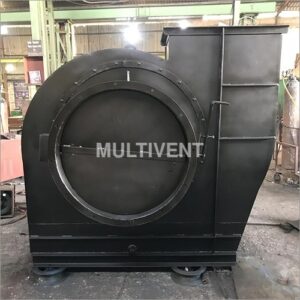
id fan induced draft fan

Simple ID Fan Working Flow

Typical boiler flow arrangement:

Boiler → Economizer → Air Preheater → ESP/Bag Filter → ID Fan → Chimney

Here, the ID fan pulls the complete gas stream through all system resistance and maintains stable furnace draft.

Why Is It Called an Induced Draft Fan?

The term “Induced Draft” comes from the fan’s working principle.

Instead of pushing air into the system, the fan induces airflow by suction.

Why Is an ID Fan Critical in Industrial Plants?

1. Maintains Furnace Draft & Negative Pressure

This is the most important function of an ID fan.

Industrial furnaces and boilers usually operate under slight negative pressure.

Typical boiler draft:

  • -5 to -15 mmWC

If the ID fan fails:

  • Furnace pressure becomes positive
  • Hot gases leak from openings
  • Flame instability occurs
  • Combustion becomes unsafe
  • Process efficiency drops rapidly

In many plants, even a few seconds of draft failure can trigger emergency shutdowns.

2. Overcomes Total System Resistance

Every process equipment creates a pressure drop.

The ID fan must overcome resistance from:

  • Boiler passes
  • Ducts
  • Cyclones
  • Bag filters
  • Scrubbers
  • Dampers
  • Stack losses

Example of Typical Pressure Drop

Equipment

Pressure Drop

Boiler

80 mmWC

Air Preheater

40 mmWC

ESP

120 mmWC

Ducting

60 mmWC

Stack

30 mmWC

Total System Resistance:

330 mmWC

If the fan is undersized:

  • Airflow reduces
  • Combustion quality suffers
  • Production decreases
  • Energy efficiency drops

3. Controls Plant Throughput

In many industries, airflow directly impacts production capacity.

Examples:

  • Cement kiln operation
  • Boiler steam generation
  • Fertilizer dryers
  • Steel furnaces
  • Chemical process reactors

Even a 10% reduction in airflow can significantly reduce plant output.

This is why proper ID fan sizing is extremely important for process industries.

4. Supports Environmental Compliance

Modern plants use pollution control systems such as:

  • ESPs
  • Baghouses
  • Wet scrubbers
  • Dry scrubbers
  • FGD systems

The ID fan ensures flue gases properly pass through these systems.

Weak draft can lead to:

  • Poor collection efficiency
  • Emission exceedance
  • Stack Opacity 
  • Regulatory penalties

For industries facing stricter 2026 pollution norms, ID fan performance is now more critical than ever.

5. Protects Industrial Equipment

Improper draft can damage expensive equipment.

Common issues caused by unstable draft:

  • overheating
  • backflow
  • refractory damage
  • duct expansion stress
  • burner instability
  • explosion risk in some systems

A stable ID fan system improves overall plant safety and equipment life.

6. Major Power Consumer in Industrial Plants

Large industrial ID fans consume massive amounts of electricity.

Typical Motor Ratings

Plant Size

Typical Power

Small Plant

75 kW

Medium Plant

250–800 kW

Large Power/ Process Plants

1–5 MW

Often one of the top 3 electricity consumers in a plant.

So fan efficiency directly impacts operating cost.

7. ID Fan Reliability = Plant Reliability

If the ID fan trips, the entire process may shut down instantly.

Possible Consequences:

  • Boiler trip
  • Kiln shutdown
  • Furnace emergency stop
  • Production halt

For this reason, many industries use:

  • 2 × 50% configuration
  • 1 Working + 1 Standby arrangement

An industrial ID fan is selected based on:

  • Gas flow (Nm³/hr or m³/hr)
  • Temperature
  • Dust loading
  • Gas composition / corrosion
  • Static pressure
  • Density
  • Altitude
  • Material of construction
  • Abrasion severity
  • Variable load requirement

Industries Where ID Fans Are Used

ID fans are mission-critical in:

  • Power plants
  • Sugar mills
  • Fertilizer plants
  • Cement plants
  • Steel reheating furnaces
  • Biomass boilers
  • Waste incinerators
  • Chemical plants
  • Pulp & paper
  • Petrochemical heaters

Important ID Fan Design Parameters

Common ID Fan Problems & Failure Modes

Because ID fans handle hot and dusty gases, they are exposed to severe operating conditions.

Common Failure Modes:

  • impeller erosion
  • corrosion
  • imbalance
  • vibration
  • shaft failure
  • bearing overheating
  • seal leakage
  • casing wear
  • choking
  • efficiency drop

Regular condition monitoring and predictive maintenance are essential for long service life.

Why ID Fan Efficiency Matters in 2026

With rising electricity costs and stricter environmental regulations, industries now focus heavily on:

  • Energy-efficient ID fan design
  • Low vibration operation
  • Reduced maintenance downtime
  • CFD-optimized impellers
  • High-efficiency motors
  • Smart vibration monitoring
  • VFD-based airflow control

Modern high-efficiency ID fans can significantly reduce:

  • Power consumption
  • Maintenance cost
  • Process instability
  • Emission problems

One-Line Summary

No ID Fan = No Draft → No Stable Process → No Production

For many process plants, it is literally a mission-critical rotating equipment asset.

6 Main FAQs About ID Fans

1. What is an ID Fan?

An ID Fan (Induced Draft Fan) is an industrial centrifugal fan that creates negative pressure and pulls flue gases through boilers, furnaces, ESPs, bag filters, and other process equipment before releasing them to the chimney.

2. Why is an ID Fan important?

An ID fan is critical because it maintains proper furnace draft, supports stable combustion, controls gas flow, improves pollution control efficiency, and ensures safe plant operation.

3. What happens if an ID Fan fails?

If an ID fan fails:

  • Furnace pressure can become positive
  • Hot gases may leak
  • Boiler or kiln may trip
  • Production may stop
  • Emissions may increase

In many plants, ID fan failure can shut down the entire process.

4. What is the difference between FD Fan and ID Fan?

  • FD Fan (Forced Draft Fan) pushes fresh air into the furnace.
  • ID Fan (Induced Draft Fan) pulls exhaust gases out of the system.

Both work together to maintain balanced airflow in industrial processes.

5. Where are ID Fans used?

ID fans are widely used in:

  • Power plants
  • Cement plants
  • Sugar mills
  • Steel industries
  • Biomass boilers
  • Chemical plants
  • Waste incinerators
  • Pulp & paper industries

6. Why do ID Fans consume high power?

ID fans consume high power because they must overcome total system resistance from ducts, boilers, ESPs, bag filters, scrubbers, and chimneys while continuously handling large volumes of hot gases.

Leave a Comment

Your email address will not be published. Required fields are marked *